
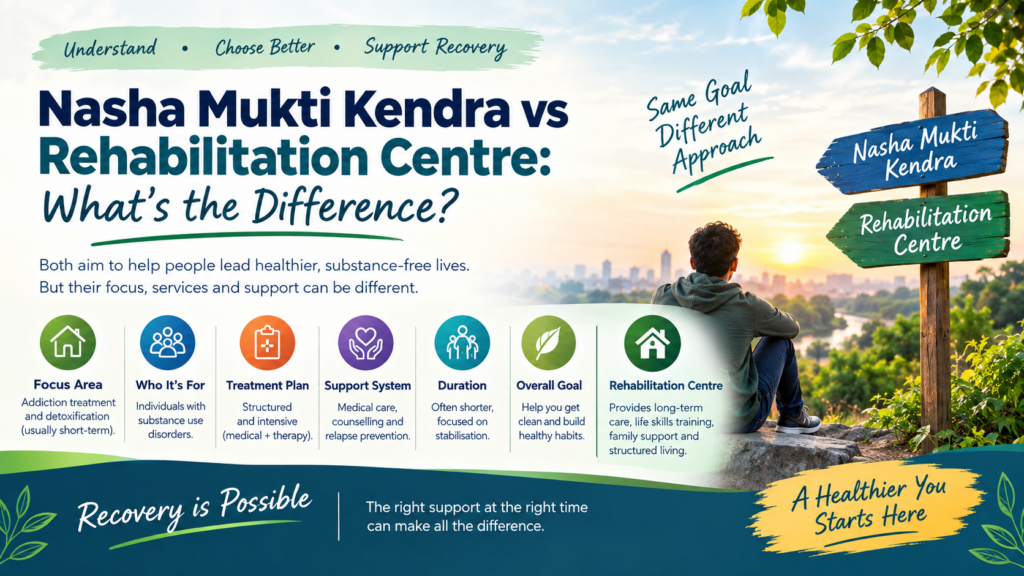
A Nasha Mukti Kendra and a Rehabilitation Centre are, for the most part, one and the same thing under two names. One name points to the goal, which is being free of the addiction. The other points to the work that comes after, getting a life running properly again. So when a place calls itself one or the other, it’s usually hinting at where it puts its energy: the medical side, or the long stretch that follows.
What does the first stage of care involve?
When someone walks in still drinking or using, the first few days are about one thing, getting through withdrawal without anything going wrong. What have you been taking? Since when? How much in a day? Any liver problem, sugar, blood pressure, a seizure in the past? The answers decide which medicines are used. Nurses check in through the night, because that’s when withdrawal often hits hardest, and the patient gets fluids and food even if he doesn’t want either.
What does a rehabilitation programme do?
Once the shaking and the sleepless nights ease, the person can actually listen, and that’s when the real work starts. Quitting doesn’t bring back the trust that’s gone at home, or clear the loan he took, or get the job back. It doesn’t do much for the guilt either. Rehabilitation is where those things get dealt with, one at a time, usually slower than the family would like.
The days themselves are plain. A group session in the morning, a counselling slot, yoga or a walk, chores, meals at fixed times, lights out on schedule. It sounds dull, and it is a little. But many of these men haven’t had an ordinary day in years, and the dullness is part of what helps.
Comparison at a glance
| Point | Medical stabilisation stage | Recovery and rebuilding stage |
| Main aim | Stop use safely | Build a stable life without substances |
| Led by | Doctors and nurses | Counsellors, therapists and peers, with medical backup |
| Usual length | 1 to 3 weeks | 2 to 6 months, sometimes longer |
| Focus | Body | Mind, behaviour and daily routine |
| Biggest risk if skipped | Dangerous withdrawal or early dropout | Going back to use within weeks |
Is detox the same as rehabilitation?
No, and this is where many families go wrong. Detox treatment is only the opening step. It clears the substance from the body under a doctor’s watch, and for alcohol and some prescription drugs that supervision really matters, because withdrawal can bring on seizures or severe confusion. What it can’t do is teach anyone how to stay sober.
Here’s how it often goes. A man finishes detox, feels better than he has in months, and goes home sure that he’s fine. The same friends are at the corner, the same fights are waiting at home, the same pressure is at work. Three weeks later he’s drinking again. Nothing was wrong with the detox.
Which does a person need first?
If he drinks heavily every day, has depended on alcohol for a long time, or became seriously unwell after trying to quit before, getting medical help should be the first step. That part isn’t negotiable. If he has already been through detox somewhere and keeps sliding back, a longer stay is probably what he needs, not a second round of detox.
Most people end up needing both. A decent place will work out which one when you first sit down with them, instead of handing everyone the same plan.
How long does the whole process take?
- Weeks 1 to 3: medical checks, safe withdrawal care, and gradually rebuilding physical strength
- Months 1 to 3: counselling, group work, a routine that holds
- Months 3 to 6 and beyond: planning for home, work and check-ins afterwards
Longer stays tend to work better, though it isn’t a rule. A man with one substance and a calm family may do fine with less. Someone with years of heavy use and a house full of conflict will probably need more.
What happens after the person comes home?
Most families don’t think much about this part, and they should. Cravings don’t just appear from nowhere. They arrive with a trigger: a certain friend’s phone call, payday, seven o’clock in the evening when he used to sit down with a drink. In relapse prevention, he learns what his own triggers are and decides in advance what he’ll do about each one. Call the counsellor. Walk over to his brother’s place. Go to the evening meeting even when he doesn’t feel like it.
The family has a job too. In family counselling, relatives hear what often nobody has told them, that this is a health problem and not a weakness of character. Slowly the blaming eases, the secrets come out, and the shouting at the dinner table starts to fade.
Common beliefs that get families into trouble
- “If he relapses, treatment will fail.” Not necessarily. It usually means the plan needs changing, not throwing away.
- “Once he’s home, the hard part is over.” The first few months back are often the riskiest, so support after discharge matters.
What should families look for when deciding on a treatment centre?
Ask plainly and expect plain answers:
- Is a qualified doctor available on site, including at night?
- Is the treatment plan written for this person, or is it the same for everyone?
- Does the programme include counselling for the family?
- What support is there after discharge?
- Can relatives visit and see the place before admitting someone?
Be careful with anyone promising a “guaranteed cure in 7 days.” Addiction is a long-term condition, and people who know it well talk about managing it and recovering, not about quick miracles.
Conclusion:
The two names describe two halves of one journey. First the person gets safely off the substance, then he learns to live without it. What’s written on the signboard matters far less than whether the place offers real medical care, a plan made for the individual, involvement of the family, and support after discharge.
If you’re weighing up options for someone you love, Jeewan Disha Foundation can help you understand which stage they are at, and there’s no pressure to admit anyone. You can call +91-8506800368.
Read this blog also: How Nasha mukti Kendra works
Frequently asked questions
Can someone be admitted if they don’t want to go?
Sometimes families feel they have no choice, and we get that. But forced admission often ends with him sitting silent, counting days. Talk first, calmly, more than once.
Will we be able to talk to him while he’s there?
Not in the first week or so. Most centres ask families to wait, because a phone call on day three can undo a lot. After that, calls and visits begin.
Does every patient get the same treatment?
No. A man leaving fifteen years of daily whisky isn’t a twenty-year-old on heroin, and the plan shouldn’t pretend he is. Ask how they’d tailor it.
What if he relapses after treatment?
It happens more often than families expect. One slip doesn’t cancel his months of work. Call the centre quickly instead of hiding it; shame does more harm than the slip.
How do we know it’s time for professional help?
If you’re searching this at midnight, it’s probably time. Hidden bottles, money going missing, late mornings, a temper that wasn’t there before. Don’t wait for a hospital visit.