
The night before admission is rough. Bags partly packed, the patient upset or silent, and the family exhausted from endless cups of tea and worry. Everyone is picturing tomorrow, and nearly everyone pictures it wrong.
Locked gates. Shouting. A bare room and a long, lonely night. A properly run de-addiction center looks nothing like that. It’s calmer than people expect, and much more medical. Once you know roughly how the first day goes, the fear shrinks a bit, for the patient and for you.
Walking in
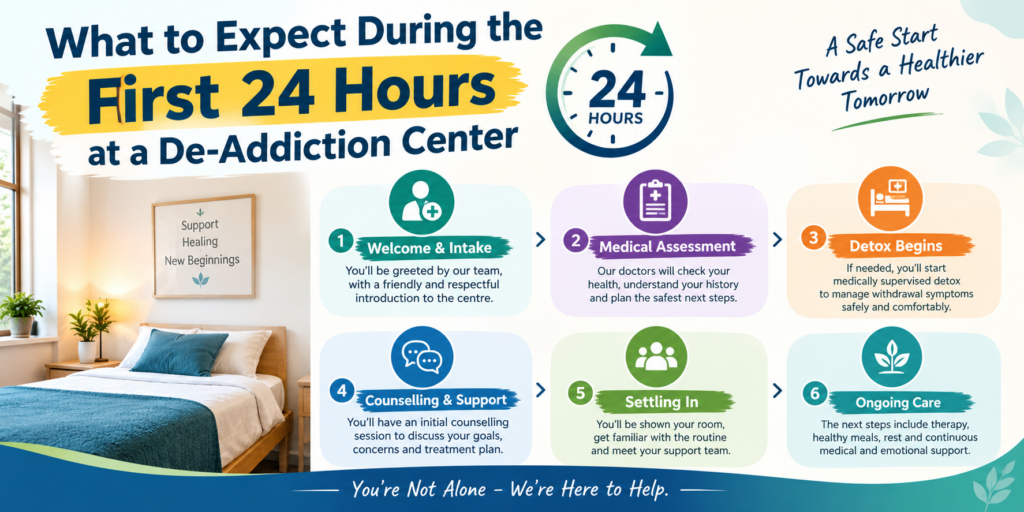
Someone meets you at reception, and the first job is paperwork. Admission form, consent form, ID proof, a family contact number. Read it all before signing. If a line doesn’t make sense, ask, and a decent rehabilitation centre will explain it without hurrying you.
Then comes the bag check. Phones, lighters, loose tablets from home and anything that could hide a substance are usually kept aside and noted down. It’s the same rule for every patient, so try not to take it personally. Some patients bristle anyway. Staff who stay calm and matter-of-fact make this part pass quickly.
The doctor sees the patient first
Before therapy, before the room, a doctor or trained nurse checks the basics: blood pressure, pulse, temperature, general condition. After that come the questions. What does the person use? How much? How often? When was the last time? Has anyone tried to stop before?
Honest answers matter more here than anywhere else in the building. Say a man drinks a bottle of whisky a day but tells the doctor “just a couple of drinks.” The doctor plans around the lie, and the plan could be unsafe. The same goes for a second substance that nobody mentions.
The doctor will also ask about diabetes, blood pressure, liver trouble, seizures, depression, old surgeries and any medicines already being taken. Blood tests often follow, especially for heavy drinkers.
Relatives usually get pulled in too. You may be asked to sit in or to answer questions separately, which is useful, because families notice things patients skip. How long the sleep has been bad, for one.
When detox starts
It depends on the substance and on when the patient last used it. Someone who still has alcohol in their system may simply be watched for a few hours before symptoms begin. Someone who stopped yesterday could already be shaking.
Alcohol withdrawal may cause shaking, heavy sweating, a racing heartbeat, nausea, agitation and sleepless nights. Rarely but seriously, it can bring seizures or confusion. That’s the reason for supervision. Opioid withdrawal feels like a very bad flu: body aches, cramps, a streaming nose, goosebumps, anxiety. Miserable, yes, though usually not dangerous in the same way.
Through the first 24 hours, staff check vitals at regular intervals and watch for trouble. The doctor may prescribe something for withdrawal symptoms, for sleep or for the stomach. Plans differ from patient to patient, and a doctor who gives everyone the same tablets is one to question.
How it feels from the inside
Most patients feel terrible on day one. Some cry. Some snap at everyone. Some become silent, keeping their eyes fixed on the ground. A few feel strangely light, because the hiding has stopped.
Asking to go home is very common. So is the promise: “I’m done, I won’t touch it again, just take me home.” Staff hear this daily, and good ones neither argue nor shame the person. They listen, then suggest waiting a few more hours until the doctor has reviewed how things are going.
If your phone rings that evening with a tearful request to be collected, speak to the counsellor or doctor before you answer. The first night is a bad time to decide anything.
Room, food and routine
The patient gets a bed, often in a shared room at first, and someone explains the daily schedule: wake-up, meals, medicine rounds, group sessions, rest, lights out. Day one is a lighter version of that. The body comes first. Heavy counselling can wait.
Food is plain and regular. Early withdrawal kills appetite and brings nausea, so light meals and plenty of fluids are normal. Don’t be alarmed if the patient barely sleeps that first night. That’s expected, and staff should be checking in through the hours.
The first talk with a counsellor
Within a day or two, most centres introduce the patient to a counsellor. It isn’t deep therapy yet. It’s closer to an introduction: who you are, what brought you here, what scares you, what you hope for. The counsellor may also outline the next few days.
At Jeewan Disha Foundation, the programme includes counselling, a 12-step programme and yoga and meditation. These build up slowly once the person is physically steady, rather than being thrown at them on day one.
Where the family fits in
Sitting outside while strangers take over can make you feel useless. You aren’t. Your first task is giving the doctor accurate details: the substance, the amount, the timing, the health history. Your second is finding out when and how you can reach the centre, because most limit calls and visits for the first few days. Your third is asking who your contact person is and when the next update is due.
After that, step back, which is the hard bit. Don’t call every hour. Don’t turn up with food and comforts the centre already provides. Patients tend to settle faster when relatives trust the process, even if it costs you some sleep.
And look after yourself. Eat something. Talk to a friend if guilt creeps in. You made a difficult decision out of love.
Five things to ask before you leave
Ask the doctor or staff, while you’re still standing there:
- Who’s on duty tonight, and how do I reach you in an emergency?
- When is my first update, and who will give it?
- What can I bring next time, and what’s banned?
- What happens if the patient says they want to leave?
A reliable rehabilitation centre provides clear, prompt answers to these questions. Hesitation is worth noticing.
One day proves very little
The first 24 hours don’t predict how recovery will go. Some patients struggle badly, then turn a corner within a week. Others look fine at first and hit harder moments later. Neither tells you the outcome.
What the day should give you is peace of mind on the basics: a doctor who examined the person properly, staff who spoke with respect, and a plan you understand.