
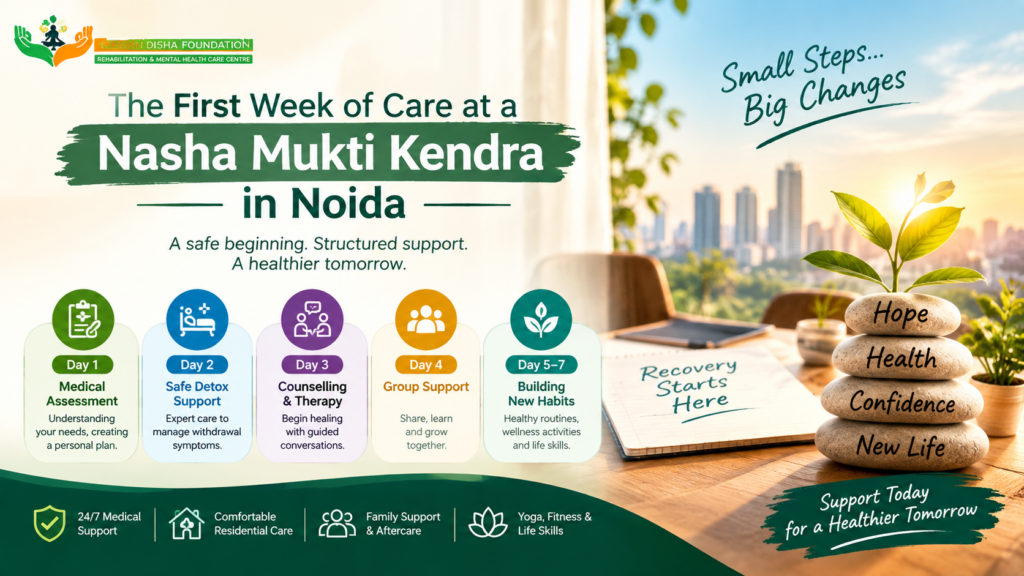
The first week at a Nasha Mukti Kendra in Noida helps shape the journey that follows. This is when assessment happens, the body starts stabilising, and someone begins adjusting to a rhythm that looks nothing like the one they’ve been living in. Knowing what these first seven days actually involve makes the whole thing feel less intimidating, both for the person going through it and the family watching from the sidelines.
Noida’s grown into something of a treatment hub over the last few years — partly because it’s close to Delhi, partly because more families here are actively choosing structured, professional care over trying to muddle through at home. Understanding what intake week really looks like helps set expectations that are actually realistic, rather than based on guesswork. It also helps to understand how the broader treatment process works overall, since the first week is really just the opening stage of a much longer journey.
What Happens On Day One
Day one is almost entirely about assessment, not active treatment. A doctor runs a full physical exam, goes through medical history, checks current health status. Separately, a counsellor looks at mental state, background, and whatever specific circumstances brought the person here.
This combined picture shapes everything that comes next. A Nasha Mukti Kendra in Noida that rushes or skips this step is cutting a corner that actually matters — the whole treatment plan hinges on getting this right from day one.
Why Does Assessment Take So Long
Because rushing it just produces a weaker plan. Physical health, substance history, family background, mental state — these all interact in ways that don’t show up in a five-minute conversation. Taking real time here means the medical team isn’t left guessing further down the line.
- Blood tests and vital checks establish a physical baseline
- Substance use history clarifies withdrawal risk and likely intensity
- Family background reveals support systems and potential stressors
- A basic psychological screening flags anything needing separate attention, such as anxiety or depression
What Does Withdrawal Management Look Like In The First Few Days
Withdrawal management means someone’s watching vitals around the clock, controlling symptoms, and responding fast if anything shifts unexpectedly. This is usually the most physically demanding stretch of the whole first week.
Depending on what substance is involved, this can run anywhere from three to ten days. Alcohol and certain heavy substances tend to produce sharper withdrawal symptoms, while others taper off more gently. Nursing staff stay closely involved through this window, since complications can show up with barely any warning.
When Does Counselling Actually Begin
Light counselling often starts within the first two or three days, even while the body’s still stabilising. It’s not deep therapeutic work yet — more about building some initial trust and making sure the person doesn’t feel completely alone during an uncomfortable stretch.
Full individual counselling usually ramps up once physical symptoms have settled, somewhere around day four or five. Starting that connection early, even briefly, tends to make the shift into heavier therapy feel less jarring later on.
What Does A Typical Daily Schedule Look Like During Week One
A typical day includes fixed meal times, a morning medical check-in, rest periods, and one or two shorter counselling or orientation sessions. The pace stays deliberately lighter than later weeks, since the body’s still catching up.
- Morning vitals check and medication if needed
- Breakfast at a consistent time
- Brief counselling or orientation session
- Rest period
- Light activity such as a short walk, if medically appropriate
- Evening check-in with nursing staff
None of this structure is rigid just for the sake of it — predictability genuinely helps someone whose daily life has felt chaotic for a long time.
How Involved Should Family Be During This First Week
Family involvement in week one usually means updates and brief check-ins rather than full visits, since the person needs room to stabilise both physically and emotionally. Most centres schedule a short family orientation call within the first few days to walk through what’s coming over the next several weeks.
A well-run Nasha Mukti Kendra in Noida treats this communication as a genuine priority, not something bolted on later, because anxious families left in the dark tend to make decisions — like pushing for early discharge — that actually work against the person’s own progress.
What Are The Warning Signs Of A Poorly Managed First Week
Warning signs include vague answers about the assessment process, thin medical monitoring during withdrawal, and barely any communication with family during those early days. A facility that’s confident in its own process explains all of this clearly, without dodging.
If a centre can’t describe what a typical first week actually looks like in real, specific terms, that usually means the process is less structured than the marketing suggests.
Why Does The First Week Matter So Much For Long-Term Recovery
The first week matters because it builds trust, safety, and the groundwork everything else stands on. Someone who feels genuinely looked after and safely handled during this stretch tends to open up more in therapy later. One that’s mishandled, or rushed, can create resistance that takes weeks to undo.
This is also the stage where medical stabilisation either goes smoothly or creates complications that slow down everything after it. Getting it right early tends to shorten the overall timeline, not stretch it out.
Making The First Step Easier
Understanding what actually happens during intake week takes away a lot of unnecessary worry for families. It’s rarely as dramatic as people picture — mostly it’s careful assessment, close medical attention, and a gradual, structured introduction to a completely different daily rhythm.
Choosing a Nasha Mukti Kendra in Noida that explains this clearly, and treats the first week with the same seriousness as everything after it, tends to set the whole recovery journey off on steadier ground. Families weighing options across Delhi NCR often compare a few centres before deciding, which is a reasonable way to approach a decision this important.